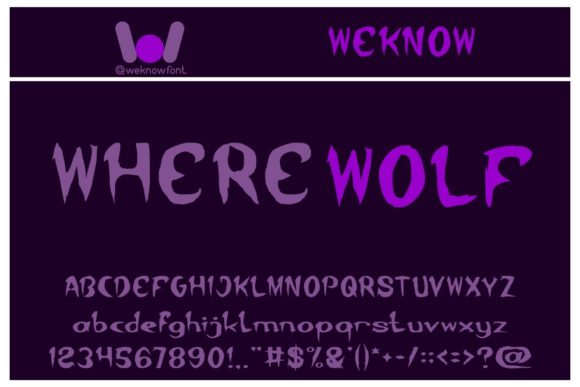
Where Wolf: Unleashing Gothic Flair in Modern Design
There is a specific moment in the life of a creative project where polite, safe typography simply won't cut it. You are designing a logo for a craft brewery that wants to feel rustic and raw, or perhaps you are laying out a cover for an indie horror anthology that needs to scream "danger" from the shelf. In these instances, you need a typeface that brings its own personality to the table, one that doesn't just sit there looking pretty but actively participates in the storytelling. This is where the power of a distinct gothic display font comes into play, specifically one like Where Wolf. It isn't just about making words legible; it is about setting a mood instantly, bridging the gap between vintage aesthetics and contemporary edge.
Defining the Atmosphere of Your Brand
When we talk about branding, we often focus on color palettes and imagery, but the typography you choose is the voice of your visual identity. If you are a small business owner or a creative entrepreneur, you know that consistency is key to recognition. However, consistency doesn't mean boring. Consider the apparel industry or the music scene—these markets thrive on bold statements. Where Wolf offers a versatile style that leans heavily into gothic tradition but maintains a modern polish. It avoids the illegibility issues that often plague blackletter or heavily distressed fonts, making it a practical choice for logos and brand identity systems that need to look professional yet edgy.
Imagine a high-end streetwear label. They want to evoke a sense of rebellion and history without looking like a costume shop. Using a font like Where Wolf for their wordmark or hang tags creates an immediate visual hook. It signals to the customer that the brand has depth and character. For designers, this means you can create a strong visual hierarchy without relying on dozens of different weights. Sometimes, a single, powerful display font does the heavy lifting, allowing you to keep the rest of the design clean and focused.
Practical Applications Beyond the Screen
One of the most common pitfalls in design is falling in love with a font on screen only to realize it fails in print. This is particularly true for complex display typefaces. However, the construction of a versatile gothic font allows it to transition smoothly across various mediums. For those involved in packaging design, the texture and weight of the type matter immensely. Whether you are designing a label for a limited edition wine or a box for a board game, the font needs to hold its detail at different scales.
Take the world of editorial design and publishing as another example. Horror book titles and Halloween magazines often rely on a specific visual language to attract their audience. They need typography that feels atmospheric—perhaps a little bit dangerous, a little bit mysterious. Where Wolf fits this niche perfectly. It has the visual weight to stand alone on a poster or a book cover, but it is also refined enough to be used in pull quotes or chapter headings within a layout. For content creators and bloggers, this translates to social media graphics that stop the scroll. An Instagram story or a YouTube thumbnail featuring bold, gothic typography instantly communicates a vibe that standard sans-serif fonts cannot achieve.
Mastering Font Pairings and Hierarchy
Using a display font effectively is rarely about using it in isolation. The real magic happens in the pairing. If you use a strong, stylized font like Where Wolf for your headers, you need a supporting cast that complements rather than competes. A common strategy is to pair a gothic display font with a clean, geometric sans-serif or a simple serif font for body copy. This contrast creates a dynamic visual rhythm.
For example, if you are designing a website for a horror convention or a gaming community, you might use the display font for the main navigation and hero text. Then, switch to a highly legible sans-serif for the schedule details and ticket information. This ensures that your design has the "cool factor" without sacrificing readability. It is about finding the balance between style and function. Always test your pairings in context. Does the mood of the display font clash with the tone of the body text? Does the x-height of the two fonts align well enough to create a cohesive look? These are the practical questions that separate amateur design from professional work.
Navigating Licensing and Usage Rights
This is a topic that many creatives prefer to skip, but it is vital for anyone looking to use a premium font for commercial purposes. Whether you are a freelancer delivering assets to a client or a business owner building your own brand, understanding the license is non-negotiable. A "commercial font" license typically dictates how many users can install the software and what types of products you can create with it.
For instance, if you are creating merchandise like t-shirts, mugs, or posters to sell, you generally need a license that explicitly covers physical goods for sale. If you are a marketing agency creating assets for multiple clients, you might need an extended license or a separate license for each client project. Before you finalize your design with a typeface like Where Wolf, review the End User License Agreement (EULA). It protects you legally and ensures that the font designers are compensated for their work, allowing them to continue creating high-quality design assets. Ignoring this step can lead to costly legal headaches down the road, so treat font licensing with the same seriousness as stock photography or music rights.
Injecting Personality into Digital Products
The digital landscape is crowded. Whether you are selling Canva templates, printable planners, or digital art, you need to differentiate your product. Generic typography is the fastest way to blend into the background. By incorporating a creative font with a strong personality, you add perceived value to your digital products.
Think about the invitations market. Gothic and vintage styles are trending heavily for weddings and events—think "Til Death Do Us Part" themes or moody, romantic aesthetics. A font like Where Wolf can be the centerpiece of a wedding suite or a party invitation that feels bespoke and expensive. For game developers, it can define the user interface of a dark fantasy RPG or the menu screen of a mystery adventure. The font becomes part of the user experience, guiding the player deeper into the world you have built. It is not just decoration; it is a functional element of the storytelling that enhances the overall immersion.
The Final Thought on Versatility
Ultimately, the tools you choose define the limits of your creativity. While it is easy to stick to the safety of standard system fonts, exploring typefaces with distinct character opens up new possibilities. Where Wolf represents that bridge between the dramatic flair of the past and the clean demands of modern design. It allows you to be bold when you need to be and subtle when the context requires it. Whether you are crafting a brand identity for a new startup, designing a poster for a local band, or laying out the next great horror graphic novel, having a gothic display font in your toolkit ensures you are ready for whatever creative challenge comes next. It is about having the right asset to tell the right story at the right time.