Buladig: The E-Sport Display Font for Modern Digital Design
You know the feeling when you're scrolling through a gaming tournament livestream or browsing a new indie game's website, and the typography just hits different? It's bold, it's aggressive, it commands attention without trying too hard. That's the sweet spot Buladig lives in. This e-sport display font was designed with a modern, high-energy aesthetic that speaks directly to the gaming community and anyone creating visuals in that fast-paced digital space. But here's what makes it interesting beyond the obvious tournament poster application: Buladig has enough versatility to work across branding, merchandise, social content, and even editorial layouts when used thoughtfully.
A Typeface Built for Energy and Impact
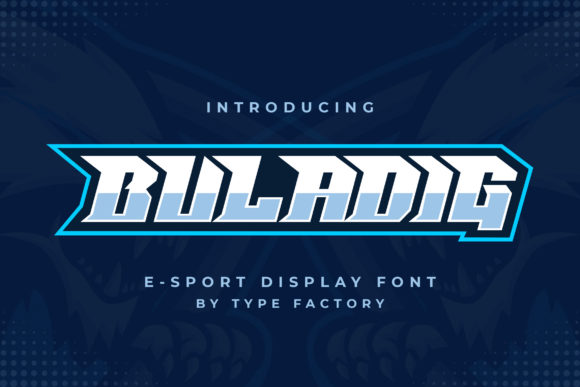
Let's talk about what you're actually looking at when you open up the Buladig font files. This is a display typeface, meaning it's engineered for headlines, logos, and large-format text rather than body copy. The letterforms carry a geometric backbone with sharp angles and condensed proportions that feel distinctly modern. There's a muscular quality to the characters—thick strokes, tight spacing, and deliberate cuts that give each letter a sense of motion.
What separates Buladig from generic bold fonts you might find on free font sites is the intentionality behind its construction. The designer clearly studied the visual language of competitive gaming, esports team branding, and tournament graphics. You see it in the way certain letter junctions are handled, how the weight distribution feels balanced despite the aggressive angles, and how the overall texture of a word set in Buladig reads as cohesive rather than chaotic.
For designers working in the gaming space, this matters enormously. When you're building a brand identity for an esports team, designing a tournament bracket graphic, or creating merchandise for a gaming content creator, the font carries as much meaning as the logo mark itself. Buladig understands that assignment.
Where This Font Actually Works in Real Projects
The obvious application is gaming-related design, and rightfully so. Tournament advertising, game title logos, streaming overlays, Discord server graphics, YouTube thumbnails for gaming channels—Buladig was born for this territory. But limiting it to strictly gaming projects would be selling it short.
Consider packaging design for energy drinks, fitness supplements, or tech accessories. That same bold, high-impact visual language translates naturally. A startup launching a productivity app aimed at young professionals could use Buladig for their logo and marketing assets to communicate speed, efficiency, and a modern edge. Social media managers creating Instagram carousels or TikTok graphics for brands targeting a younger demographic will find the font grabs attention in crowded feeds.
Here's a practical breakdown of where Buladig fits comfortably:
- Logo design for gaming studios, esports teams, tech startups, and lifestyle brands targeting younger audiences
- Poster and flyer design for gaming events, LAN parties, launch parties, and music events with an electronic or hip-hop vibe
- Merchandise including t-shirts, hoodies, caps, stickers, and phone cases where bold typography is the primary visual element
- Social media graphics for announcements, countdowns, highlight reels, and promotional content
- Website headers and hero sections where you need an immediate visual punch above the fold
- Album cover art and music-related branding, especially for genres like EDM, hip-hop, and experimental electronic
- Editorial layouts for gaming magazines, tech blogs, and culture publications that want a contemporary typographic voice
- Digital products like stream overlays, desktop wallpapers, and mobile app interfaces
- Invitations and event materials for themed parties, product launches, or community meetups
- Packaging and labels for products that want to project confidence and modernity
Pairing Buladig with Other Typefaces
Here's where practical design knowledge really comes into play. Buladig is a display font, which means setting an entire paragraph in it would be exhausting to read. You need a supporting cast. The most effective approach pairs Buladig with a clean sans serif font for body text—something like a geometric sans with open letterforms and comfortable reading rhythm. Think fonts in the family of Futura, Poppins, or even a straightforward grotesque sans for longer passages.
For projects that need a slightly warmer or more editorial feel, pairing Buladig with a humanist sans serif or even a subtle serif font can create an interesting tension. Imagine a gaming magazine layout where Buladig handles the feature headline and a readable serif handles the body copy. That contrast creates visual hierarchy and keeps the reader engaged.
A few pairing principles worth testing:
- Set Buladig at a large size for headlines and use your secondary font at a noticeably smaller size for subheadings and body text. The size contrast reinforces hierarchy.
- If Buladig is your bold, angular voice, choose a secondary font that's rounder and more neutral. Opposites attract in typography pairing.
- Test your combinations at the actual sizes they'll appear. A pairing that looks great on your 27-inch monitor might fall apart on a mobile screen or a printed poster.
- Limit yourself to two, maybe three fonts total in a single project. Buladig plus one body font plus one accent font is plenty.
Readability and Practical Considerations
Let's be honest about display fonts for a moment. They're not designed for paragraphs, and that's perfectly fine. Buladig excels at short, punchy text—team names, taglines, event titles, call-to-action buttons, and headline statements. Where you want to use it sparingly is in any context where someone needs to read extended text comfortably.
For web design, this means Buladig belongs in your hero section, your section headers, and maybe your navigation if you keep it simple. Pair it with a highly legible sans serif for all body content, button labels, and form text. On social media, it works beautifully for the main text overlay on graphics where brevity is the norm anyway.
For print materials like posters and flyers, consider the viewing distance. Buladig at 72-point on a poster reads beautifully from across a room. The same font at 14-point on a business card might lose some of its character depending on the specific letter combinations. Always print a test before committing to a large run.
Licensing is another practical consideration worth addressing. If you're using Buladig for a client project, a commercial product, or merchandise you plan to sell, make sure you understand the license terms that come with your purchase. Most premium fonts offer different license tiers depending on usage—desktop, web, app, and extended commercial. Reading the license agreement isn't the most exciting part of a design project, but it protects both you and your client from issues down the road.
Making the Most of What's Included
When you invest in a font like Buladig, take the time to explore everything included in the package. Many modern display fonts ship with alternate characters, ligatures, stylistic sets, and sometimes even icon or symbol additions. These extras can make the difference between a design that looks like you downloaded a font and one that feels custom.
Try swapping out alternate letterforms for key characters in your logo or headline. Test different stylistic sets to see if any of them better match your project's personality. These features exist to give you creative flexibility, and they're often overlooked by designers who install the font and start typing immediately.
Also consider how Buladig handles different color applications. Display fonts with strong geometric structures often look striking in single-color applications—white text on a dark background, or reversed out of a bold brand color. They can also handle gradient fills and texture overlays well, though simplicity usually wins with this kind of typeface.
The real value of a typeface like Buladig isn't just its visual appeal—it's the consistency and professionalism it brings to a project. When your gaming tournament's social graphics, website, printed banners, and merchandise all share the same typographic voice, you build recognition. People start associating that visual language with your brand before they even read the words. That's the power of choosing the right font and using it intentionally across every touchpoint.