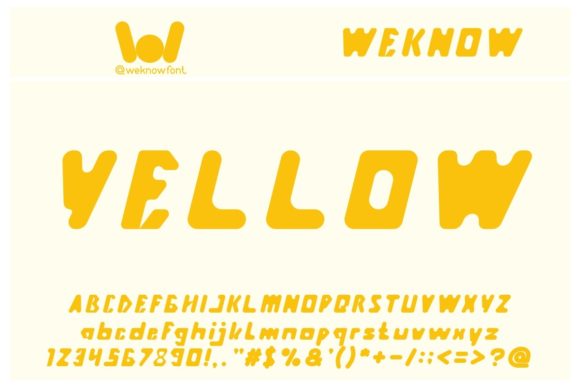
Yellow: A Bold Typeface for Modern Brands
Some typefaces whisper. Others make a statement. Yellow falls firmly into the second category. It's a display font with presence—cool, thick, and unapologetically bold. If you've been scrolling through endless font libraries looking for something that actually feels different, this one deserves a closer look.
What makes Yellow stand out isn't just its weight. It's the personality baked into every curve and terminal. The letterforms carry a modern edge without feeling cold or sterile. There's warmth in the roundness of certain characters, contrasted by sharp geometry in others. This balance gives it versatility that many heavy display fonts lack. It doesn't scream for attention—it commands it with confidence.
Where Yellow Truly Shines
Let's talk about real applications. If you're building a brand from scratch or refreshing an existing identity, typography choices matter more than most people realize. The font you select becomes the voice of your visual communication before anyone reads a single word of copy.
Logo design is where Yellow excels immediately. Its thick strokes and distinctive character shapes create logos that are memorable at any size—from a favicon to a billboard. Think about brands in the streetwear space, music industry, or entertainment sector. A typeface like this carries the energy those audiences expect. It works beautifully for apparel labels, podcast artwork, YouTube channel branding, and album covers.
Packaging design is another natural fit. Picture a hot sauce bottle, a craft beer label, or a snack brand targeting younger consumers. Yellow's boldness ensures shelf presence. When products compete for attention in crowded retail environments—physical or digital—typography that pops is non-negotiable.
For poster and editorial design, this font brings the kind of visual hierarchy that makes layouts sing. Magazine covers, event flyers, book jackets, comic titles, movie posters—anywhere you need a headline to grab eyeballs instantly, Yellow delivers. Its thick letterforms maintain readability even when layered over busy backgrounds or photographic imagery.
Practical Pairing Strategies
No display font works in isolation. The real magic happens when you pair it thoughtfully with complementary typefaces for body copy and supporting text.
Since Yellow is a display font with significant visual weight, you'll want to balance it with something lighter and more neutral for longer text passages. A clean sans serif font like Montserrat, Inter, or Work Sans creates a pleasant contrast without competing for attention. The display font handles headlines and pull quotes while the sans serif carries the informational load.
For projects that need a touch more sophistication, pairing Yellow with a refined serif font can work surprisingly well. Think Georgia, Lora, or Source Serif Pro for body text. The combination of a bold modern display face with a traditional serif creates visual tension that feels intentional and polished.
Here's a practical tip: test your pairings at actual sizes before committing. A font that looks gorgeous at 72px on your monitor might lose its charm at 14px in a paragraph. Print a test page. View it on your phone. Show it to someone who isn't a designer. Fresh eyes catch things we miss when we're deep in the creative process.
Building Brand Recognition Through Typography
Consistency is the backbone of brand recognition. When you choose a typeface like Yellow for your primary display needs, you're making a commitment to a specific visual personality. That commitment pays dividends over time.
Consider how audiences process visual information. They don't read logos—they recognize shapes. The distinctive thick letterforms of a creative font like Yellow become associated with your brand through repeated exposure. Every Instagram post, every email header, every product tag reinforces that association. Over months and years, your typography becomes as recognizable as your color palette or iconography.
This matters enormously for small business owners and entrepreneurs building brands on tight budgets. You might not have the resources for a full rebrand every two years. Choosing a premium font with staying power—one that won't feel dated in eighteen months—is a smart investment. Yellow's design language sits in that sweet spot between trendy and timeless.
Social media graphics benefit enormously from distinctive typography. When someone is scrolling through a feed at speed, your content has roughly half a second to stop their thumb. Bold, well-set headlines using a typeface with real character give you that edge. Create templates in Canva, Figma, or Adobe Express using Yellow for your primary text treatments. The consistency across posts builds recognition while the font's personality keeps things visually interesting.
Digital and Print Versatility
One common concern with thick display fonts is readability across different media. It's a valid worry—not every bold typeface translates well from screen to print or from desktop to mobile.
Yellow handles this transition gracefully. Its letter spacing and counter sizes—the internal spaces within characters—are designed to maintain clarity even at smaller sizes. This makes it viable for more than just oversized headlines. You can confidently use it for:
- Website hero sections and navigation elements
- Blog post titles and section headers
- Digital product covers and course graphics
- Email marketing headers
- Invitation cards and event materials
- Merchandise designs for t-shirts, hoodies, and accessories
- Business cards and stationery
- Menu designs for restaurants and cafes
For web design, consider how the font renders across browsers and operating systems. Test it in Chrome, Safari, and Firefox. Check it on both iOS and Android devices. If you're using it as a web font, ensure you have the appropriate web license and that file formats are optimized for fast loading. A beautiful font means nothing if it tanks your page speed.
Licensing and Practical Considerations
Before you commit to any commercial font for client work or your own business, understand the licensing terms. This is something many designers and business owners overlook until it becomes a problem.
Font licenses typically differentiate between desktop use, web use, app embedding, and merchandise production. A single license might cover your logo design but not extend to printing that logo on thousands of t-shirts. Read the fine print. If you're working with clients, make sure the license covers their intended use, or that they purchase their own.
Yellow, as a display typeface, is likely to appear in high-visibility applications—exactly the kind of use cases where licensing matters most. Budget for proper licensing as part of your project costs. It's a small price compared to the legal headaches of using fonts incorrectly.
Also take time to explore what's included with the font family. Many modern typography packages include multiple weights, stylistic alternates, ligatures, and extended character sets. Understanding what's available means you can extract maximum value from your purchase. Those alternate characters might be exactly what you need to customize a logo mark or create a distinctive headline treatment.
Making It Work for Your Next Project
The best way to know if a typeface fits your project is to actually use it. Download a test version if available. Set your brand name in it. Create a mockup of your packaging, your website header, your social media post. Live with it for a few days. Does it still excite you on day three? Does it communicate what you want it to communicate?
Yellow is the kind of typeface that rewards experimentation. Try it uppercase. Try it lowercase. Mix in the alternates if they're available. Set it against different color backgrounds—dark mode, light mode, vibrant hues, muted tones. A bold display font like this interacts with color in ways that can completely shift its mood and energy.
Whether you're a designer crafting a brand identity system, a content creator building a visual presence, or a creative entrepreneur launching a new product line, the typography you choose shapes how people perceive your work before they engage with the content itself. Choose deliberately. Test thoroughly. And when you find a typeface that clicks—build your visual world around it with intention and consistency.