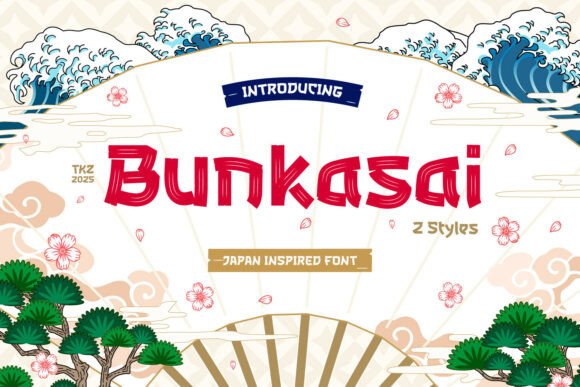
Bunkasai: Capture Japanese Elegance in Your Next Design
You know that moment when you're scrolling through a gallery of logos or browsing a shelf of book covers, and one design just stops you in your tracks? It's not always about the image itself—sometimes it's the typography that carries the whole mood. If you've ever wanted to inject a sense of artistic tradition, natural texture, and modern clarity into a project, you've probably realized how hard it is to find a typeface that balances all three without feeling cliché or overly decorative.
That's where a font like Bunkasai enters the conversation. Inspired by the fluidity of Japanese brushwork and the structure of bamboo, this display typeface offers something many designers search for: a way to reference cultural aesthetics without resorting to stereotypes. Its strokes mimic the organic variation of a hand-painted character, giving each letter a sense of movement and craftsmanship. At the same time, it includes a solid version that cleans up those textures for a bolder, more contemporary look. This dual nature makes it surprisingly adaptable—whether you're designing a logo for a boutique tea brand, laying out a poster for a film festival, or creating merchandise for a streetwear label.
Where Texture Meets Intention
What makes Bunkasai stand out in a crowded field of premium fonts isn't just its visual style—it's how that style translates into real-world projects. The brush-stroke texture isn't random; it's designed to evoke the deliberate, mindful process of ink painting. This can add a layer of authenticity to brands that want to communicate craftsmanship, heritage, or a connection to nature. Imagine a small-batch skincare line using this font on its packaging: the textured version on the label gives it an artisanal feel, while the solid version works cleanly on the website header. That kind of versatility is rare in a display font.
But it's not just about looking pretty. Typography has a job to do. It needs to be readable at the size it's used, it needs to support the message, and it needs to work within the broader system of a brand's visual identity. Bunkasai's design considers this. The letterforms maintain enough structure to remain legible even with their textured details, especially when used at larger scales—like on posters, signage, or social media graphics. For smaller applications, like body text on a website or dense editorial layouts, you'd likely pair it with a clean sans serif or a neutral serif font. Think of Bunkasai as your headline artist, not your paragraph workhorse.
Matching Typography to Project Goals
Choosing a font isn't just about personal taste; it's about aligning with the project's intent. If you're working on a brand identity for a Japanese-inspired restaurant, a martial arts studio, or a Zen meditation app, Bunkasai's aesthetic directly supports that narrative. But its use doesn't have to be literal. The font's organic lines and modern sophistication can also complement projects that value minimalism, nature, or handcrafted quality—like an eco-friendly product line, a wellness blog, or a boutique hotel's branding.
Here's a practical approach: start by defining the emotion or concept you want your typography to convey. Is it serene? Dynamic? Luxurious? Authentic? Then test how a typeface like Bunkasai performs in that role. Set your headline in its textured style and see if it evokes the right feeling. Switch to the solid version for a cleaner, more assertive tone. Try pairing it with different fonts—maybe a geometric sans serif for contrast, or a humanist serif for harmony. The goal is to create a typographic hierarchy that guides the viewer's eye and reinforces your message without overwhelming it.
Practical Applications Across Industries
Let's talk specifics. Where does a font like Bunkasai actually work well? Here are some scenarios where its character can shine:
- Logo Design & Brand Identity: Use the textured version for a logo mark that needs to feel handcrafted and unique. The solid version works for secondary brand elements like slogans or monograms.
- Packaging & Labels: Ideal for products in the food, beverage, beauty, or lifestyle sectors where artisanal quality is a selling point.
- Editorial & Book Covers: Creates striking headlines for magazines, book covers, or chapter titles, especially in genres like historical fiction, travel, or culture.
- Event & Entertainment Graphics: Perfect for posters, tickets, and merchandise for festivals, film titles, game releases, or theatrical productions with an Asian or artistic theme.
- Digital & Social Media: Grabs attention in Instagram posts, YouTube thumbnails, website hero sections, or email headers where visual impact is crucial.
- Merchandise & Apparel: Translates well onto T-shirts, tote bags, and stickers, especially for brands in streetwear, artist collaborations, or niche hobby communities.
The key is context. A font that works beautifully on a poster might not work on a business card. Always consider scale, medium, and audience. Bunkasai's detailed texture is best appreciated when given room to breathe—on large formats or in minimalist layouts where it can be the focal point.
Building a Cohesive Visual System
Great design isn't about a single element; it's about how everything works together. If you choose Bunkasai for a project, think about how it interacts with your color palette, imagery, and layout. Its natural, brush-like quality pairs well with earthy tones, muted pastels, or stark black-and-white contrasts. For photography, images with soft lighting, natural textures, or cultural motifs can enhance the font's vibe.
Also, consider the full range of the font family. Does it include multiple weights or styles? Bunkasai comes with two distinct versions—textured and solid—which gives you flexibility. You might use the textured style for primary headlines and the solid version for subheadings or call-to-action buttons. This creates visual variety while maintaining consistency.
And don't forget licensing. If you're using the font for commercial projects—client work, products for sale, or monetized content—make sure the license covers that use. Many premium fonts offer different tiers for personal, commercial, or extended use. It's a small detail that protects you legally and ensures the font creator is fairly compensated for their work.
Making It Your Own
Ultimately, a typeface is a tool. Its value comes from how you use it. Bunkasai offers a distinctive voice—one that blends tradition with modernity, texture with clarity. It won't be the right fit for every project, but when it aligns with your goals, it can elevate a design from ordinary to memorable.
Try it out. Set a headline, mock up a logo, experiment with pairings. See how it feels in context. Sometimes the best discoveries come from playful experimentation—just like the brush strokes that inspired it.